Puzzles That Do Not Run on a Clock
The word puzzle covers two things that have almost nothing to do with each other. One of them asks you to work something out. The other asks you to work something out before a bar empties, and those are not the same activity even when the board looks identical.
The distinction is worth making because it decides who the game is for. A puzzle without a clock can be paused by walking away from the desk. It tolerates being thought about. It can be played badly for ten minutes and then played well, and nothing is lost in the interval. Put a countdown on the same board and every one of those properties disappears at once.
The clock is usually visible in the copy
You cannot see a timer in a thumbnail, but you can very often see it in what the publisher chose to say.
The tell is verbs of speed. As fast as you can. Before time runs out. Beat the clock. Quick thinking. When a publisher is selling a puzzle on urgency, urgency is the product, and they will say so in the first two sentences because it is the thing they believe will make you click. The reverse also holds: descriptions that reach for words like relax, patience and pace are describing a game where the board waits.
That is a soft signal rather than a proof, and we will come back to how soft it is. But it is a much better signal than the genre label, which tells you nothing at all.
Pour, slide, arrange
The most reliable clockless designs are the ones where the board only changes when you change it.
Lipuzz - Water Sort Puzzle is a colour-sorting game built on one restriction: you may pour a liquid into a container only if that container is empty or already holds the same colour. Everything difficult about it comes out of that single rule, and its publisher makes a point of the escape hatch — if you cannot get past a level, you can take another container from the top menu. A game that documents a way out of being stuck is being honest about the kind of stuck it produces.
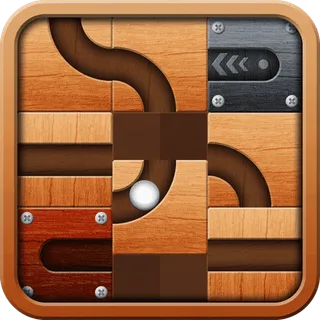
Roll this Ball is the sliding-tile idea applied to a route rather than a picture: shift the wooden tiles until there is an unbroken path for a steel ball to reach its goal. Nothing on that board is in motion until you move it, which is the structural reason the format has survived since it was made of wood.
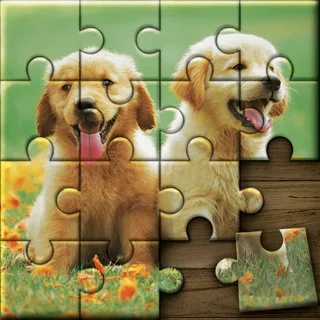
Jigsaw Puzzle makes the point explicitly. Its publisher’s selling line is that you choose a difficulty that suits your own pace, which is close to a definition of the category. Jigsaw Collections frames the same activity as a test of perseverance and attention to small things, and gives you zoom controls over the work surface, which is a feature that only makes sense if nothing is chasing you.
Boards that wait
Grid games are where the absence of a clock is easiest to mistake for the absence of difficulty.
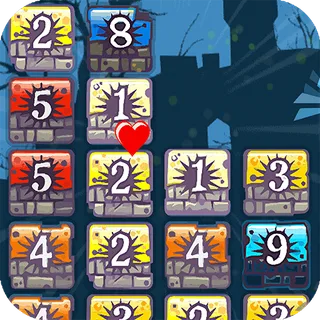
Super Chains has you building runs across adjoining blocks whose numbers step up, step down, or repeat. The chain is the whole mechanic, and the length of the chain is what you are optimising. DD Blocky is a drag-and-drop shape-fitting board — its publisher compares the pieces to the ones everybody already has in their head — and again, the shapes sit in the tray until you put them somewhere.
In both cases the difficulty is entirely self-inflicted, in the sense that it is produced by decisions you made several moves earlier rather than by anything arriving on a schedule. That is a harder kind of difficulty to shrug off. A timer gives you something external to blame.
Memory, which needs quiet
Kobadoo Flags and Kobadoo Shapes are the same design pointed at two different subjects: reproduce a sequence in the right order, one of national flags, the other of coloured geometric shapes. Their publisher describes both as working-memory training and cites research to that effect, which is a claim about cognitive science we are in no position to evaluate and are not repeating as fact.
What we can say is structural. A recall task and a countdown are actively hostile to each other, because the thing being measured is the thing the pressure destroys. These two are here as the clearest case in the catalogue of a genre where the absence of a timer is not a comfort feature but a requirement.
Physics, scenes and small worlds
Three games extend the idea past the grid.
God of Light is a light-routing puzzle: the objects in each scene reflect, split, combine, paint, bend and teleport rays of energy, and your job is to get that energy to the things that need it. Its publisher opens the description with an instruction to sit back, and sells the game on its environment and its soundtrack before it mentions a challenge. That ordering is informative.
Cut the Rope Experiments is the rope-cutting candy-delivery design wrapped in a laboratory framing, with a scientist studying the creature you are feeding. Mixed World Weekend is a platform puzzle where you use the distinct abilities of several characters to nudge monsters off the platforms — a design whose unit is a single arrangement to be solved, not a run to be survived.
The one that does not qualify
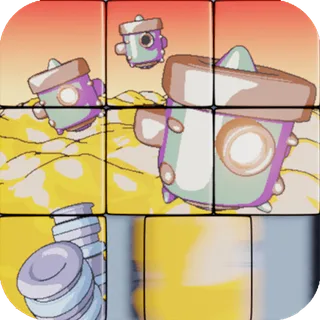
Sliding Slide is here as the counter-example, because it is the exact shape this article is about and it fails the test anyway. It is a classic tile-sliding picture puzzle across a handful of images and difficulty settings, and its own description opens on relaxation. Then it tells you to beat your best time.
That is the pattern to watch for. The clock is not always in the rules; sometimes it is only in the scoring, which means the game will let you take as long as you like and will quietly grade you on it. Whether that counts as a timer is a question about you rather than about the game. Some people cannot see a recorded time without racing it.
What we can and cannot tell you
Every claim above comes from the publisher’s own description of the game and from what the catalogue records. That is enough to say what a game asks of you and whether its own marketing sells it on speed.
It is not enough to guarantee an absence. A publisher who does not mention a timer has not promised there is no timer, and none of us has opened these games to check. What this list actually contains is eleven games whose designs are structurally compatible with taking your time, and one that says it is and then is not. Treat the eleven as a shortlist rather than a certificate.