No Install, No Account: What the Browser Format Selects For
Browser games are usually written about as a genre, as though “casual” were a property of the games rather than of the situation you play them in. It is more accurate to treat the browser as a delivery format with a specific set of constraints, and then ask what those constraints select for. The answer explains most of what you find in a catalogue like this one, including the parts that look like accidents.
The constraints
Four of them do almost all the work.
The game has to arrive over a link. There is no store page, no download, no install step where a user has already committed something. Anyone who does not understand what they are looking at within a few seconds leaves, and the metric that matters is not how good the game is but how quickly it becomes legible.
It has to run on hardware nobody chose. The same build serves a desktop with a keyboard and a phone held in one hand. It cannot assume a controller, a discrete GPU, or a screen orientation.
It runs inside a frame on someone else’s page. The game does not own the browser tab, the URL, or the back button.
And, in most cases, there is no account. Progress lives in local storage, which means it survives a coffee break and not a cleared cache. Anything the player builds up is provisional.
Those four things are not incidental. They are a filter, and the games that pass it have something in common.
What the format rescued
The clearest beneficiaries are the games that were finished before computers existed.
A chess engine, a ludo board, a domino set and a deck of cards ask nothing of the hardware and everything of the player. They were already designed for interruption, they are already legible in seconds because most people learned them as children, and they lose nothing in translation to a small screen. Chess 2D plays against the computer and highlights legal moves as you pick a piece, including the two that trip up casual players — en passant and castling. Ludo Legend and Domino Multiplayer both advertise the same feature, and it is a telling one: pass one device between people sitting in the same room and take turns on it. Ludo offers that or solo play; Domino puts a computer opponent and an online mode alongside it.
That shared mode deserves more attention than it gets. Same-device multiplayer had almost disappeared from commercial games, which prefer accounts, lobbies and matchmaking. It survives here because nothing in this format requires any of the three. Nothing to install and no account to create is exactly the condition under which handing someone your phone is a reasonable thing to do.
TRZ Battleship is the same logic in a different shape — alternating turns, one shot at a time, guess the grid before your opponent guesses yours — and ONE Card Game is the shedding card game everyone has played under one name or another, rebuilt as a browser client. Speed Pool King adapts a physical game rather than a board game, and does it by adding the one thing a real pool table does not have: a clock. Clear the table before it runs out. That is a browser-shaped decision, and it turns a game that normally takes half an hour into one that fits in a break.
What the format rebuilds
The second pattern is reconstruction. Old designs get remade for the browser rather than left behind on the hardware they shipped on, and a link is all that stands between you and them.
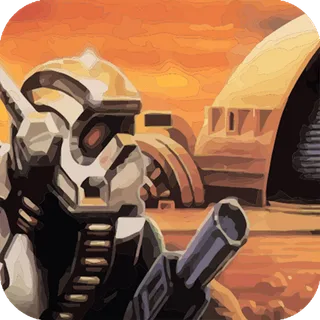
Open Dune 2 is the sharpest example we carry. Its publisher is direct about what it is: a version of the 1992 Westwood Studios game that, in its own words, was one of the first to put together all of the elements that later became the real-time strategy genre, presented here as authentic to that original. You do not need a copy of the original to see where a whole genre started. Little Alchemy is a modern design that behaves like an old one — start from four basic elements, combine them, and find out what the combination table contains. It works in a browser because the entire game is a lookup table and a good idea.
Bomber Friends rebuilds the last-one-standing bomb arena: set bombs, blast the other players from across the map, collect power-ups that make the bombs stronger, and be the one still there at the end. The format is decades old and has never needed more hardware than a browser tab has.
What the format is good at, on purpose
Some genres were not rescued or rebuilt. They fit natively because their session shape matches the way people actually use a browser tab.
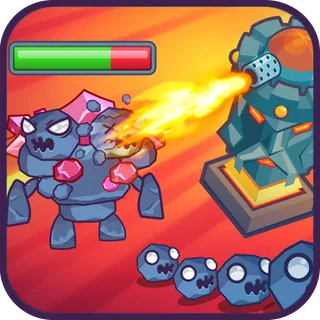
Tower defence is the obvious one. The genre puts its decisions in the gaps between attacks rather than during them, which means it arrives with pauses built in, and a game with natural pauses tolerates a browser tab in a way that a game with a five-minute unskippable sequence does not. King Rugni Tower Defense is a straightforward instance of it: hordes of elementals, a map of territories to conquer, and defences to put between the two.
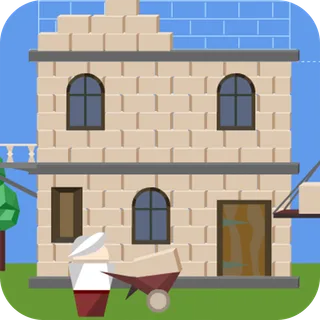
Incremental games go further and turn the constraint into the mechanic. Babel Tower has you building upward with a crew of miners, masons and builders, and the progression is designed to continue whether or not you are watching. The format’s weakness — that you will close the tab — becomes the thing the design is built around.
What it is bad at
Worth being direct about this. The browser is a poor place for anything that needs a long uninterrupted run, a save file you would be upset to lose, or precise simultaneous input from two hands and a mouse. Games in this catalogue that reach for a console-sized experience are always making a trade, and the trade is usually visible within a minute.
There is also a structural problem the format has never solved. The same games are distributed to hundreds of sites at once, embedded from the same publishers, wrapped in different logos. Nothing about a portal is exclusive. The only thing a site can actually add is selection — which games it chose to carry, and whether anyone looked at them before publishing.
That is the standard we hold ourselves to. A description here is meant to state what the game’s own publisher documents, and where nobody on this side has played it, to describe what the game is and then stop. The parts we cannot see — how hard it gets, how it feels after twenty minutes, what a level actually costs you — are left out rather than filled in. An empty space in a description is information. An invented one is not.