The Unit of Play: Browser Games That Respect Your Time
“Respects your time” is usually said about anything short, which makes it a compliment rather than a description. It is worth turning into something you can check before opening a tab, because the property people actually want is not shortness. Plenty of short games are terrible on a break and plenty of long ones are fine.
The property is the size of the unit of play: the smallest span the game itself treats as finished. An attempt, a level, a round, a board. Games with a small unit can run for hours without ever holding you, because you are handed a clean exit every thirty seconds. Games with a large unit can be brief overall and still be the wrong thing to open, because the first exit the game offers is further away than the time you have.
The second half of the property matters just as much: whether the size of that unit is legible from outside. A game that shows you the shape of one attempt in the first ten seconds is making you an offer you can evaluate. A game that will not tell you how big a commitment is until you are inside it is asking for trust it has not earned.
One attempt is the whole game
The smallest possible unit is a game with exactly one verb, where an attempt lasts as long as it takes to fail at that verb once.
Canjump is the clearest statement of this we carry, and its publisher makes it in one sentence: a game in which you can only jump, but you have to do it at the right time. There is nothing else in the description because, by the publisher’s own account, there is nothing else you can do. Whatever you think of that as an evening’s entertainment, the unit is unmistakable: an attempt runs until you jump at the wrong moment.
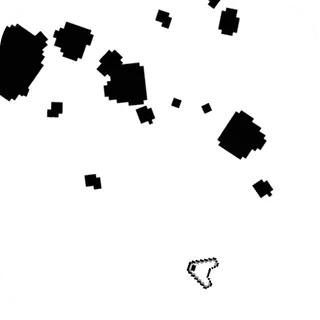
The Eggsecutioner is the same shape with a bar instead of a jump. A marker moves and you stop it in the middle. The publisher documents the pointer or touch that does it and nothing else, because there is nothing else to document. Pixeroids is Asteroids restated: guide a ship, destroy the rocks, do not collide with any of them. Collision is the one thing the description tells you to avoid, and no other failure state is named.
Penalty Shooters is the football version of this idea, and football arrived at it independently. A shootout is the shortest complete unit the sport has, and the publisher describes it in those terms — two men, one ball, one goal. Thirty-two teams are on offer, a number the publisher bothers to count, and the shootout is the only format named, which is why you can pick it up and put it down without losing a thread.
The trade is obvious. A one-verb game has no depth to discover, so what you get in the first minute is close to everything. That is a fair exchange when the alternative is opening something that will not release you.
One board, one problem
The next unit up is a level that states its own success condition and hands it to you all at once.
Drag me-ow is a hazard puzzle with a cat as the payload: get it to the cushion without the room killing it on the way, dragging with the pointer or a finger, which its publisher documents. One room, one route, one outcome. Amaze Escape is pitched by its publisher as logic and ingenuity rather than dexterity, and the whole brief is getting out of a prison. That is a description of a unit, not of a campaign.
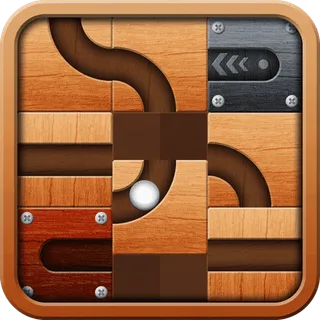
Roll this Ball is the sliding-tile family: the path from the steel ball to the red goal already exists in fragments and you shuffle wooden tiles until the fragments line up. Nothing in the description names a clock, and the board it does describe is one you can look at rather than react to. Popit vs Spinner is unusual for stating its own size — its publisher counts the levels in the same breath as naming the goal, and there are three of them, then explains the spinner mode as the way to generate fresh matches when the board runs dry. Three is not much. The point is that you were told before you clicked, and most blurbs do not tell you at all.
A round that ends without asking you
There is a third shape, and it is easy to mistake for the enemy of a short session when it is often the opposite. A game that closes its own round — on a cost you cannot pay back, on a mistake, on a boundary it drew itself — is a game that will stop for you whether or not you have the discipline to stop yourself.
Gold Mine puts a price on time inside the fiction: the nugget is worth more than the stone, and the stone is bad specifically because of what it costs you in seconds, which is the one thing the game will not give back. Dynamite is offered as the way to spend that resource well. Time is named twice in a four-sentence blurb, which is as close as this format comes to admitting that something is counting, even though it never says what. Halloween Horror Massacre has you take as many logs off a tree as you can while branches approach, and switching position is the defence its publisher names, with a golden medal held out as the target. The run ends on a branch you failed to avoid, and that is not a moment you choose.
Sliding Slide is the interesting case, because it appears to contain two different units. What its publisher describes first is an ordinary sliding image puzzle, offered with six pictures and three difficulty settings. What it describes second is a record of your best times and an invitation to beat them. The first frames the unit as however long the picture takes; the second reframes it as a target you can attack deliberately. Which one you are playing is a decision rather than a setting, and it is unusual for a description to hand you both.
The drill that admits it is a drill
Kobadoo Flags belongs in a category of its own because its publisher does not pretend the exercise is a game at all. It states plainly that the game trains working memory by having you memorise flags in the right order, and cites scientific studies on working-memory training as the reason to do it. That is the least decorated pitch in this catalogue, and what it describes is a single sequence.
Whether or not the underlying research says what the blurb wants it to say is not something we can adjudicate here. What is checkable is that the description tells you exactly what you will be doing and names the faculty it claims to exercise, and almost nothing else in the format is that specific about either.
The shape that fails the test
The pattern that goes wrong is not the long game. It is the game whose unit is defined by an economy rather than by a level.
You know it by the structure: currency accumulates across attempts, an upgrade sits some number of attempts away, and the point where you naturally stop is set by the price of the next thing rather than by any boundary the game draws. The level list still exists, and it still looks like a set of exits, but the actual unit has quietly become “until I can afford the better car”. Several games in this catalogue work that way. None of them is dishonest about it, and a few describe the loop plainly. It is simply a different offer from the one a level list appears to be making, and it is worth noticing which one you have accepted.
What we can and cannot tell you
Everything above comes from what each publisher documents and from the catalogue’s own metadata. We can read a description and tell you whether it names a unit, and we can tell you when a description names its own size, which is rare enough to be worth flagging every time it happens.
We cannot tell you how long any of these actually takes, because nobody who wrote this page has sat with a timer. A specific number would look like the most useful sentence here and would be the only invented one. What we can say is that in every game above, the game itself will tell you the size of the unit within the first attempt, which is the part that generalises past this list.