Games That Explain Themselves, and Games That Need a Minute
A game that arrives through a link has no store page, no trailer, no thirty screenshots and no wall of reviews. It has a name, an image, and a paragraph its publisher wrote for search engines. Then it has however long you are willing to give it, which is not long.
That produces a pressure specific to this format. A browser game is rewarded for being immediately legible in a way a game you paid for and downloaded is not, because the downloaded game already has your commitment before it explains anything. Here, comprehension is the commitment. If the name and the paragraph do not tell you what you would be doing, the tab closes.
The interesting part is that legibility and quality are unrelated, and the format cannot tell them apart.
When the title is the whole design document
The strongest form is a name that states the rule.
Canjump is the extreme case in this catalogue. Its publisher’s entire description is that it is a game in which you can only jump, and you have to do it at the right time. There is no second sentence, and there does not need to be one. You know the verb, you know the constraint, and you know what failure will look like. Whether the game is any good is a separate question that you can now answer in fifteen seconds, which is the point.
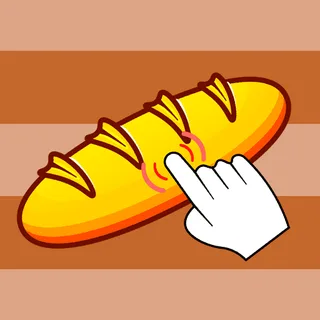
Loaf Clicker does the same work through genre vocabulary. Clicker is a word that has come to mean a specific structure — a number that goes up, and upgrades bought with the number to make it go up faster — and putting it in the title does more than a paragraph would. The only thing left to specify is what is being accumulated, and the answer is loaves.
Drag me-ow puts the input in the name. It is a drag-and-drop game in which you move a cat to its cushion without getting it killed, and the title has already told you that you will be dragging before you read a word of that.
Zombie Can’t Jump is a title that states the enemy’s weakness, which is the same thing as stating your strategy. The description fills in the rest — defences, TNT, spiked balls and gun turrets, plus weapons to pick up — but the shape was legible from four words.
When the genre does the explaining
Two entries here are legible because the thing itself is old.
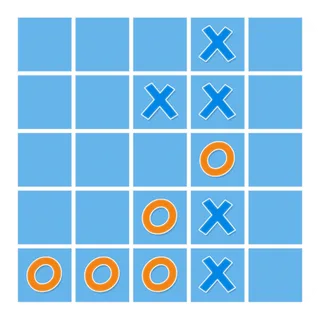
Tic Tac Toe HTML5 needs no introduction and its publisher does not attempt one. What is worth reading is the detail underneath: alongside the familiar three-by-three board there are larger grids where you need four marks in a line instead of three. That variation is the only thing about the game a reader could not have supplied themselves, and it is the only thing the description really needs to say.
Checkers Legend does something similar and slightly more useful. It leans on the fact that everybody learned the game as a child, then notes that it comes in many variants and provides rules settings so you can pick one, alongside a simple AI opponent and a second player on the same device. Those facts are the answer to the question a returning player actually has, which is not what is this but which version of it is this.
When the title tells you the wrong thing
Dark Chess is here because it is the most interesting failure case on the page, and it is not really the game’s fault.
The name says chess. What the publisher describes is a game played with Chinese chess pieces under rules that are, in their own words, very different: pieces have ranks, a piece can only take one below its own rank, and you lose when all of your pieces have been taken or none of them can move. That is a coherent and appealing design. It is also not what anyone reading the word chess is expecting, and the expectation is doing active harm — a player arriving with chess in mind has to unlearn something before they can start.
There is no good fix for this. The name is the accurate one for the game’s own tradition, and it is misleading in the context the game is being served in. This is what happens when a catalogue puts every game from everywhere on the same grid.
When you have to be told a story first
The last group are games whose descriptions open with a world rather than a rule.
Badland is described by its publisher as an award-winning atmospheric side-scrolling platformer set in a forest where something has gone wrong, and you control one of the forest’s inhabitants while you find out what. That is a paragraph about mood, and it is a legitimate paragraph — atmosphere is genuinely the product here — but it is not a paragraph you can act on. You would have to open it.
KULI buries a fairly precise structure inside a scenario. There is a zombie outbreak, you have construction skills, and the loop is a day-night cycle: build and upgrade during the day, survive the horde at night. The structure is legible once you have read to the end of the description. The name is not going to get you there.
Tiny Tomb is dungeon crawling with a twist its publisher states plainly — you are rescuing friends across four worlds while keeping a bad-tempered, picky monster fed — and the second half is the part the name gives no hint of. Magikmon is a monster-capturing role-playing game, which the name signals to anyone who has met the genre and to nobody else.
Tower Defense is the counterweight, and worth ending on. It is filed here under adventure rather than strategy, which is a piece of catalogue noise it inherited from the feed. And it does not matter at all, because the title is the genre and the genre is the rules. A misfiled game with a self-explanatory name loses nothing. A well-filed game with an opaque one is invisible.
The cost of the pressure
Being immediately legible is a real advantage in this format, and the games at the top of this page have it. It is also a filter that has nothing to do with whether a game is worth playing, and applied hard enough it selects against everything that needs a minute before it makes sense.
We can describe how legible these games are from the outside, because that is a fact about their names and their published descriptions. What is behind the ones that stay opaque is something we would have to play to tell you, and we have not.