What the Publisher Did Not Tell You
Every game in this catalogue arrives with a description attached, written by whoever is distributing it. It is a paragraph of marketing copy, it is the same paragraph on every site that carries the game, and for anyone assembling a portal it is very close to the only text that exists about the game before somebody sits down and plays it.
That makes it worth reading as a genre rather than as information. It has conventions, a house vocabulary, two reliable failure modes, and a set of things it almost never contains. Knowing the shape of it tells you a surprising amount — not about the games, but about what you are not being told, which is the more useful of the two when you are choosing what to open.
Everything quoted below is quoted from the publisher’s own description. None of it is our summary of the game, and none of it is evidence about how the game plays.
Failure mode one: the blurb that describes nothing
The shortest descriptions in this catalogue run to a dozen words or fewer, and the interesting thing is how they spend them.
Tiger Run spends its entire description comparing itself to a different game. In full, it reads: “Very exciting and interesting tiger parkour game, as fun as subway parkour”. Two adjectives, a genre, and a claim about a game that is not this one. If you have played the endless runner it is gesturing at you now know roughly what to expect, and if you have not, you have been told nothing at all.
Rope Bowing Puzzle picks the other standard move, which is to describe difficulty instead of mechanics: “It looks easy enough, but you also have to concentration and dodge some obstacles that will make it difficult for you”. Obstacles have to be dodged and concentration is required. That is true of most games ever made.
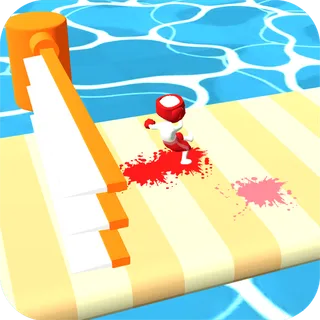
Death Run fails in a third way, which is worth separating out because it is not the writer’s fault. Its description has plainly been machine-translated and has not survived the trip: it opens by declaring itself an adventure game, tells you that you hold thousands of lives, states that the game is full of various agencies, and then explains that as the controller of the agency you can repel all people and avoid passing. Something coherent was almost certainly said in the original. What reached us is a portrait game with obstacles in it and a strong suggestion that you are working the traps rather than running from them, and no way to check that reading short of opening it.
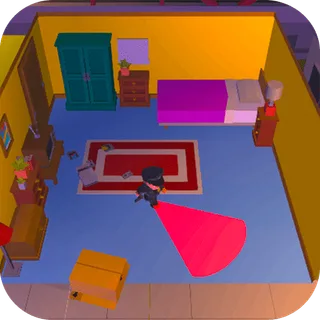
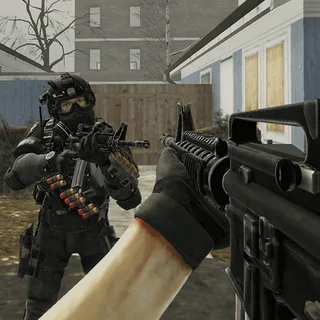
Smart Looter is a string of imperatives — be quick, be sneaky, take the loot, watch out for the patrols — which at least establishes that there is loot to collect and patrols to avoid, and stops there. What a patrol does when it sees you is not addressed. Call of Ops 2 is pure category vocabulary: “next-gen graphics and big arsenal of weapons to shoot rival players on different maps”. Every noun in that sentence is a category rather than a fact. How many weapons, how many maps, what modes, how a round ends: none of it is there.
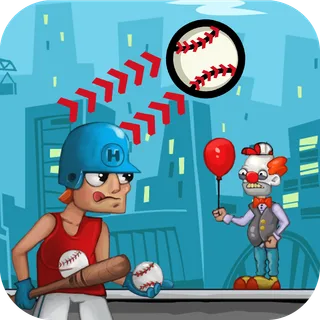
Baseball for Clowns is the purest version of a related habit, which is to spend the whole description on premise. It tells you that Henk was the best baseball player in the world, that jokers cheated him out of it, that he retired, and that they are back to cause trouble. It is a complete short story, and the only thing in it addressed to a player is the closing line asking you to help Henk get rid of the jokers. What that help consists of — what you aim, throw, hit or choose — never comes up.
Failure mode two: the blurb that describes everything
The opposite failure is more common than you would expect and considerably less useful.
Cake Shop Cafe Pastries & Waffles cooking Game runs to roughly two thousand characters, several times the length of anything quoted above, and it is written for a search engine rather than a person. It cycles through cake making game, bakery games, cooking game, kitchen game, chef game, food truck game, serving game and dessert shop game, several of them more than once, then arrives at a feature list of the same material in bullet form.
Read it twice and you can extract the actual game: customers arrive, you assemble what they ordered, coins buy upgrades and unlock further venues. Two sentences of information inside two thousand characters. The long blurb and the dozen-word blurb fail in the same way and end up in the same place, which is worth noticing before assuming that length is a proxy for effort.
Copy written for a different shop window
A third pattern is not a failure of writing at all. It is copy that was written well, for a reader who is somewhere else entirely.
God of Light has a genuinely good description. It names the mechanics precisely — mirrors, prisms, splitters, collectors, black holes and filters, all bending a beam toward the things that need lighting — and credits the soundtrack to a named musician. It also contains a sentence offering additional level trees “free using collected Fireflies or with in-app purchase”, and a bullet promising regular updates with new worlds and levels.
Those two lines are addressed to somebody standing in a mobile app store deciding whether to install something. You arrived here by clicking a link. We are not in a position to tell you whether either sentence still applies to the build embedded on this page, because that is exactly the kind of thing you would have to play the game to find out. Fractal Combat X has the same artefact in its feature list, a bullet promising new missions every day sitting alongside its arcade and simulator modes.
This is the most interesting category, because nothing in it is a lie. It is accurate copy that has been carried, unedited, across a distribution chain from a store listing to an embed on a portal, and has quietly stopped being about the thing you are looking at.
What a good one looks like
It is worth being specific about the counterexample, because the genre is capable of much better and occasionally does it.
Space Tower Defense describes its own economy in one sentence: you build defensive structures along the attack path, the strength of a structure depends on what it costs in energy, and energy is what you receive for destroying enemy equipment. That is the entire game as a system of exchange rates, and you can decide from it whether you want to play a tower defence today without knowing anything else.
Ultimate Strike does something rarer still and names the one design decision that changes every round: twenty-seven guns, nine maps, and a random weapons loadout on spawn. Two of those three are inventory counts. The third means you never bring a favourite weapon to a fight, which is a real claim about the experience and the only sentence in the description that matters.
Tower Crush simply enumerates. One tower, up to six floors, and then the actual list of what can go on them, from machine guns and cannons through shockwaves and lasers to plasma cannons. It is not elegant, but a specific list is information and an adjective is not, and after enough blurbs promising an epic arsenal the plain list reads as a courtesy.
The thing that is almost never in one
Controls. In our catalogue, fewer than one game in five arrives with any statement from its publisher about what you press, tap, or drag.
That is a strange omission for a format whose entire distribution model is a link clicked by somebody who may be on a phone or may be at a desk. It is also the single most consequential one, because a player who cannot work out the input in ten seconds does not conclude that the description was thin. They conclude the game is broken and they close the tab.
Why the gaps here stay gaps
Which brings this round to what we do with all of the above, since a portal’s only real choice is what it does when the source material runs out.
The rule is that the publisher’s description never appears on a game page. It is kept in our data so that changes to it can be spotted between syncs, and it is not printed, because it is the same text on every site carrying that game and reproducing it is what gets a catalogue like this classified as duplicate content. Every game page here is written from scratch against the metadata and that description.
The second rule is about controls specifically. Each record carries a marker for where its control information came from — the publisher’s own text, direct observation, or nowhere — and the process that rebuilds the catalogue refuses a page that names an input while that marker says nowhere. It is a mechanical check with no judgement in it, which is the point: judgement is what produces plausible invented key bindings.
The third is the honest one. There is a field on every record for a person’s sign-off, meaning somebody opened the game, played it, and checked the page against it. Across the live catalogue that field is currently empty on every single game. So what you are reading on a game page is an original description written from the publisher’s claims and the catalogue’s metadata, and where those two sources stop, the page stops. Nothing here fills a gap with something reasonable-sounding.
That is a weaker promise than most portals make and a more accurate one. An empty space in a description is a fact about what is known. A filled one is only ever as good as whoever filled it.