The Sports Category Is Not About Sport
If you arrive at a category called sports from anywhere else in games, you arrive with an expectation the category cannot meet. Elsewhere, a sports game means a simulation: licensed teams, a season, a physics model that is trying to be right, and a fifteen-minute match that punishes you for not knowing the sport. None of that is here, and none of it is coming, because none of it fits.
What the label actually marks is a subject. These are games about football, basketball, skiing and motor racing in the sense that a pinball table is about a film. The subject supplies the setting, the scoring vocabulary and the reason you already know what you are looking at. The rules underneath are arcade rules, and they were chosen because they can be understood in five seconds and resolved in thirty.
That is not a criticism. It is the only thing that works in this format, and it is worth saying plainly so nobody comes looking for the other thing.
The single repeated action
The dominant shape is a sport reduced to its one photogenic moment, repeated.
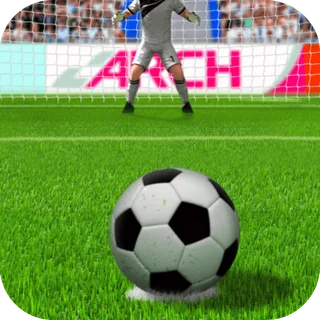
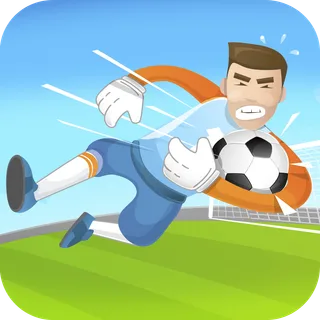
Football gets reduced to the penalty. Penalty Shooters is the shootout on its own — two men, one ball, one goal, and a stadium supplying the pressure — with a roster of teams to pick from and a cup at the end of it. Penalty Challenge is the same reduction with a documented structure: five attempts to beat the goalkeeper and five to stop your opponent’s, in a tournament against the computer or against another person online. Notice what has been removed. There is no midfield, no possession, no offside. The part of football that has a clear win condition and a five-second cycle has been kept, and everything requiring you to understand the sport has been discarded.
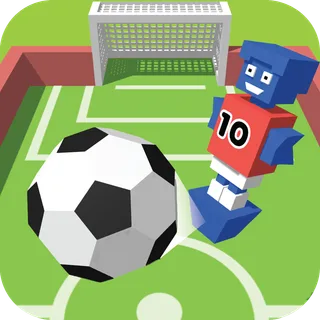
Flip Goal reduces it differently. The kick becomes an aiming problem — hit the goal without touching any of the other players on the pitch — and the progression is a coin economy spent on stadium upgrades and new balls. The football is a backdrop for a trajectory puzzle, and the upgrades are what keep you there.
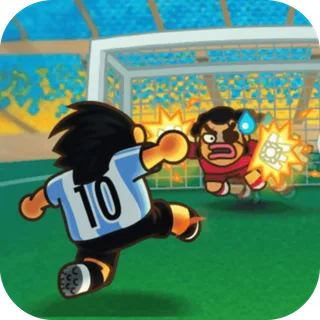
Foot Chinko is the clearest admission that none of this is a simulation. It is presented as international tournament football, and the opposition it builds towards is a villainous goalkeeping duck. Whatever else that is, it is not a claim to realism, and there is something to be said for a game that stops pretending in its own description.
Basketball, three ways
Basketball is the sport this format has taken to most completely, because the shot is the whole game and the shot is one gesture.
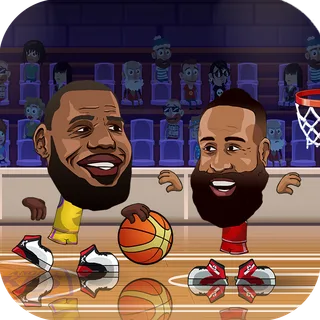
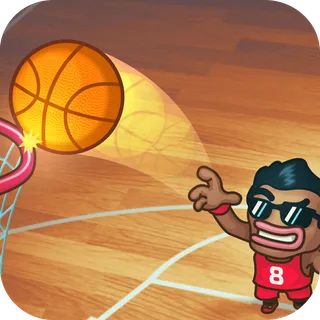
Basketball Stars advertises a two-player mode alongside a solo one, and its publisher frames the appeal around two gestures anybody would recognise from a highlight reel: the three-pointer and the dunk. Neither of those is a rule. Both are pictures of the sport, which is the tell. Basket Champs picks the tournament framing instead — choose a team, enter a world championship — and its publisher leads with the fact that it comes from the same developer as Foot Chinko, which tells you which tradition it belongs to before it tells you anything about the basketball.
Basketball Master is the most honest of the three about what it is measuring. Its publisher names the ingredients directly: precise timing, good aiming, and a bit of luck. That last item is doing real work. An arcade sports game needs a margin of luck, because without it a skilled player finds the ceiling immediately and an unskilled one never scores at all.
Racing that is not driving
The motor racing entries are where the pattern is easiest to see, because three of them are visibly the same game with the map changed.
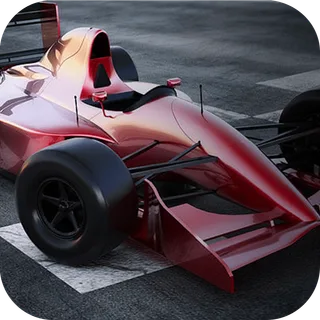
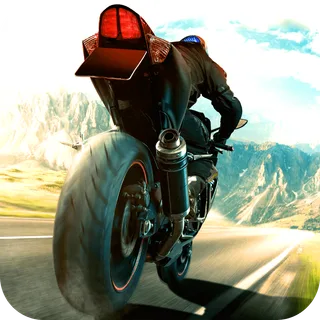
Grand Prix Hero races across multiple continents. Stock Car Hero races across North America. Superbike Hero races across Europe and the Middle East. All three descriptions run through the same beats in the same order: get past what is in front of you, use a boost, collect coins, upgrade the vehicle before the next race. Even the deviations are cosmetic — two of them say dodge the traffic and the third says boost between opponents, one names banked corners and another tight ones.
This is worth pointing at rather than complaining about. A series like this is a working design being re-dressed, and re-dressing is the economics of the format. It also means that if you have played one and did not like it, you have information about the other two, which is more than you usually get.
Ski King 2022 sits next to them structurally even though the surface is snow. Run down the slope, gather the coins, improve, and escape the avalanche that the publisher saves for the last line as the reason to keep going. Whether that avalanche is a real failure state or a closing flourish is not something the description settles, and it is not something we are going to guess at.
Where the category boundary goes wrong
Penalty Superstar is a game about being a goalkeeper. You start a career from nothing, you collect power-ups that make you better at catching the ball, and you work through leagues and cups. By any reading it belongs with the two penalty games above.
We file it under puzzle, because that is where the feed puts it.
That is worth being open about, because it explains something about every category page on a site like this one. Categories arrive from the publisher along with everything else. They are a rough sort applied at scale by people who are cataloguing thousands of games, not a considered taxonomy, and a game about stopping penalties can land in puzzle while a game about taking them lands in sports. The same thing has happened elsewhere in the catalogue: several basketball games are filed under arcade and puzzle rather than here.
The practical consequence is that a category page is a starting point and not a complete answer. If you want the football games, the category will give you most of them and hide at least one.
What we can say and what we cannot
Everything above is drawn from what each publisher documents and from how the catalogue records the game. We can compare descriptions against each other, and we can point out when three of them are structurally identical, because that is a claim about text rather than about play.
We cannot tell you whether the physics in any of these feels good, whether the goalkeeper in one penalty game is fairer than the goalkeeper in the other, or which racer is still worth opening after a week. Nobody on this side has played them, and a confident verdict written without playing is exactly the kind of thing that makes lists like this worthless. What we can offer is the shape: pick the sport you like, expect an arcade game, and give it the forty seconds it will take to tell you the rest.