Browser Games That End, and Browser Games That Don't
Genre is the wrong way to sort browser games. Two games can both be labelled puzzle and have nothing in common that matters to you: one has a last level and one does not. That single structural difference decides how long a session runs, whether you can stop cleanly, and whether the game is any use at all on a fifteen-minute break.
It is also almost never stated on a portal listing, which is odd, because it is the first thing you notice and the last thing you remember.
Endless games end when you fail
In an endless game the only progress is a number. There is no final screen, no credits, no state where the game agrees you are finished. The run terminates when you make a mistake, and then it starts again.
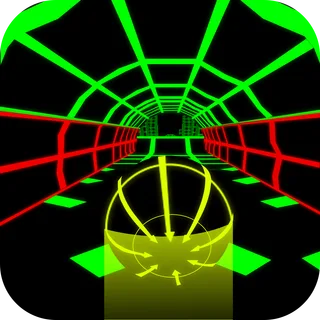
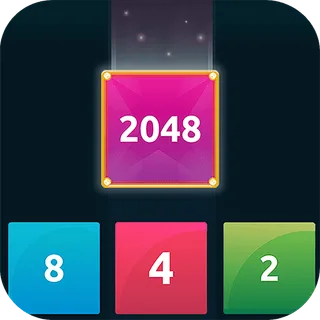
Slope Racing 3D is the clearest example we carry. Its publisher frames the whole game as a question — how far can you go — and there is no other objective. Street Ball Jam is a one-touch basketball game its publisher describes as having endless gameplay, with unlockable balls and courts layered on top as the only thing resembling progression. 2048 X2 Merge Blocks crosses the number-merging idea with falling blocks and asks you to keep the field clear for as long as you can, which is a losing proposition by design.
The advantage of this shape is that it costs nothing to enter. There is no save file, no chapter you are halfway through, no obligation. You open the tab, you play until you lose, and the game is over whether or not you were ready.
The disadvantage is the mirror image. Stopping is always arbitrary. You either quit on a good score, which feels like walking away from a streak, or you quit after a bad run, which feels like conceding. There is no moment the game offers you where stopping is the natural thing to do. That is not a flaw — it is the mechanism that makes the format sticky — but it is worth recognising before you start one on a lunch break.
Finite games end when you finish
A finite game has a level list. Each level has a completion condition, and when you meet it you get a boundary: a screen that says this part is done. You can stop there without losing anything.
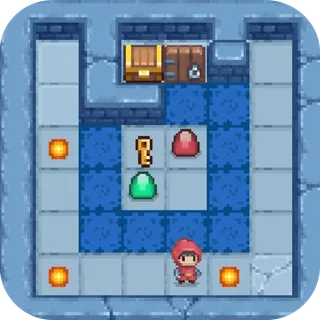
Flamit builds its levels on single screens and gives each one an explicit goal — light every torch before your flame burns out. Because a level is one screen, the unit of play is small enough to fit in whatever time you have.
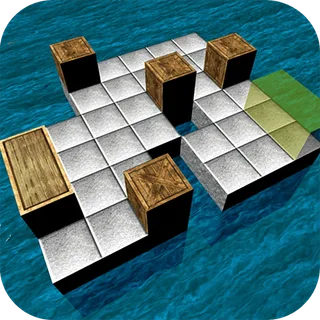
Incredible Box is as reduced as a puzzle gets: roll a box to a target position. Its own publisher describes the game as very hard, which is a more honest piece of marketing copy than the genre usually manages, and the reason the reduction works — there is only one mechanic to be difficult with.
Icy Purple Head 2 gives each level a destination, a postbox, and a switch between sliding and sticking as the way to reach it. Slimoban 2 is more interesting than it first looks: there are potions that let you lift blocks and slimes and drop them elsewhere, traps to lure things into, water to push things into — and the publisher is explicit that none of it is required. The only thing you must do to pass a level is collect the coin. A game that tells you which of its systems are optional is doing you a favour.
Donutosaur 2 hands you shape-changing, gravity-switching and friends who push and pull objects, with candies to collect and a donut to reach at the end of it. A Mole in a Hole is a route-finding game across twenty levels: read the map, pick the right path home.
Key & Shield 2 and Little Bouncing Guys both frame the game as a journey with a stated endpoint — one to unlock everyone on a cursed island, one to get a lone survivor through thirty levels and back to his tribe. The framing matters more than it seems. A game that tells you there is a destination is making a promise about the size of the commitment.
Poly Art is the extreme case: assemble a picture from shards, complete the picture, move to the next one. Its publisher sells it on relaxation rather than challenge, and nothing in the description names a way to lose. It is the closest thing on this list to a shape where stopping and finishing are the same action.
Why the split matters more than the genre
If you have ten minutes, a finite game gives you a unit of play that fits inside it and a place to stop. If you have an open-ended evening and no intention of finishing anything, an endless game is the better fit precisely because it does not ask for a commitment.
The failure case is picking the wrong one for the situation. An endless game on a short break tends to overrun, because there is never a good moment to close it. A finite game in an idle hour tends to run out, and then you are choosing another game anyway.
There is a third pattern worth naming, because it looks like the second and behaves like the first: the finite game with a progression layer bolted on. Unlockable skins, upgradeable equipment, currencies that accumulate across runs. These have level lists, so they read as finite, but the unlock track is endless by construction and it is the part designed to keep you there. Several games in our catalogue do this. It is not dishonest, but it does mean the level list is no longer a reliable indicator of how long the game intends to hold you.
What we can and cannot tell you
We can tell you the shape. Whether a game has a finish condition and what that condition is comes from what its publisher documents, and the structure of a game is a claim we can check without playing it.
We cannot tell you how long any of these takes. Nobody who wrote this page has timed a playthrough, and a made-up estimate is worse than no estimate, because it will be wrong specifically for you. The closest thing to a guide is Flamit, the one game here whose publisher states the size of the unit: thirty levels, each of them a single screen. Most of the others describe themselves in levels too, but none of them says how much a level asks of you, and we are not going to guess on their behalf.
That is the practical version of this whole distinction. Not which game is best, but which one will let you leave.